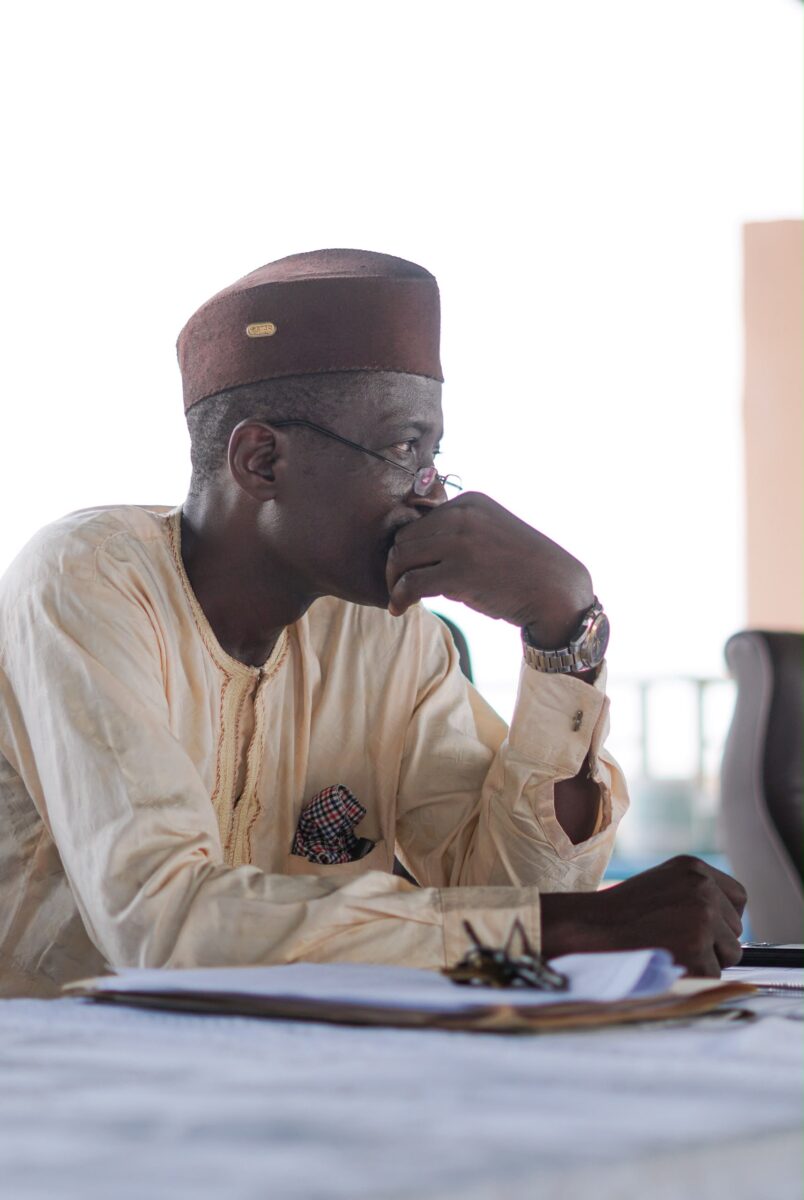
KWARA RANKS FIRST IN NORTHERN NIGERIAN IN TRCN TEACHERS’ QUALIFYING EXAMINATION
August 21, 2026
CELEBRATING DONALD: THREE TERMS. THREE FIRST PLACES. ONE EXCEPTIONAL YEAR.
September 2, 2026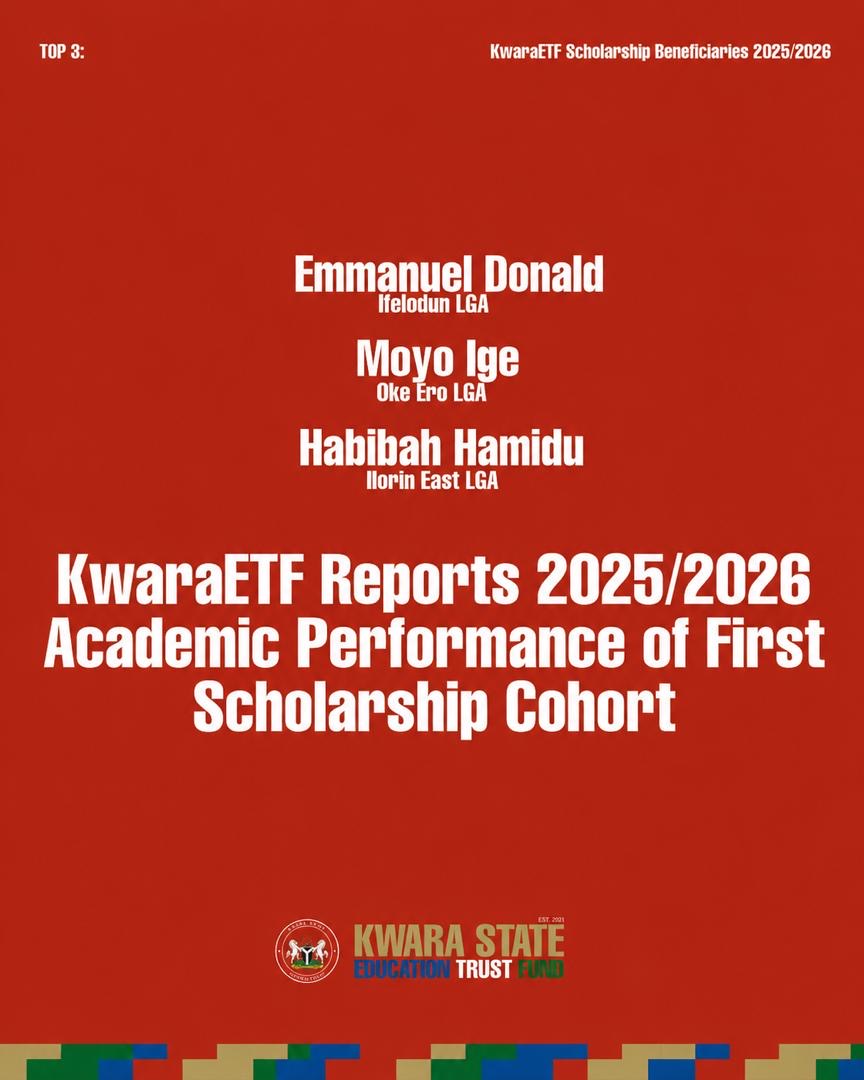
The Kwara State Education Trust Fund (KwaraETF) has concluded its academic performance review of the first cohort of beneficiaries under its Scholarship Programme for the 2025/2026 academic session, with the review highlighting strong performances alongside areas requiring continued academic support.
The annual review covered all 11 beneficiaries enrolled across four Federal Unity Colleges. Performance was assessed across the three academic terms against the Fund’s 60% programme benchmark, with the review examining academic outcomes, progression, the effectiveness of interventions introduced during the session, and areas requiring further support.
Five beneficiaries concluded the session above the 60% benchmark. At LGA level, Ifelodun recorded the highest average performance at 80.6%, followed by Oke Ero at 73.9% and Ilorin East at 73.3%. Isin recorded an average of 62.45%, while Kaiama recorded an average of 42.52%.
One beneficiary concluded the session just below the benchmark at 59.7%. The review notes that while the beneficiary recorded improvement during the second term, the improvement was not sustained in the third term. Continued academic monitoring and support have therefore been recommended.
Five beneficiaries concluded the session below the programme benchmark. All five are from Kaiama LGA. Despite their overall performance falling below the benchmark, all five showed improvement in their third-term performance compared with their first-term results, with notable improvements recorded following intervention efforts.
Following the release of the second-term results, KwaraETF conducted diagnostic assessments and engaged parents to better understand the learning gaps identified among beneficiaries. Tutorial support and closer academic monitoring were subsequently introduced. The interventions produced measurable improvements among the affected beneficiaries, demonstrating the value of early identification, targeted support and sustained engagement.
The review also identified significant variations in academic outcomes across the cohort. While Ifelodun, Oke Ero, Ilorin East and Isin recorded stronger overall outcomes, Kaiama recorded the lowest LGA average and accounted for all five beneficiaries who concluded the session below the programme benchmark.
Of particular significance is the disparity between performance at the point of scholarship selection and subsequent academic outcomes. Beneficiaries from Kaiama LGA were among the strongest performers during the NCEE selection process but subsequently accounted for all beneficiaries who concluded the academic session below the programme benchmark.
This finding warrants further investigation. While the experience of this small cohort should not be generalised to all learners from Kaiama, the disparity raises important questions about the transition from primary to secondary education, foundational learning, and the factors that influence whether strong examination performance translates into sustained academic progress.
The findings reinforce KwaraETF’s commitment to looking beyond examination scores and ensuring that scholarship support translates into sustained learning and academic progression.
“The scholarship is not simply about getting children into school. It is about helping them succeed once they get there.”
As the new academic session begins, KwaraETF will continue termly academic monitoring and result collection, maintain tutorial support for beneficiaries requiring additional assistance, strengthen engagement with parents and guardians, and conduct targeted follow-up on the areas identified through the review.
The Fund will also maintain the 60% programme benchmark while strengthening early identification of beneficiaries at risk of falling below the threshold. Beneficiaries requiring additional support will continue to receive targeted interventions, with progress reviewed throughout the academic year rather than waiting until the end of the session.
In addition, KwaraETF will undertake further engagement with relevant education stakeholders to better understand the factors contributing to the performance disparities identified in the review, particularly the gap between NCEE performance and subsequent secondary-school outcomes among the Kaiama beneficiaries.
The Fund recognises that academic performance is influenced by multiple factors and that the appropriate response is not simply to identify underperformance, but to understand its causes and determine what support is most likely to improve outcomes.
The first year of the scholarship programme has therefore provided more than a measure of academic performance. It has generated valuable evidence to strengthen how KwaraETF selects, monitors and supports beneficiaries going forward.
The Fund will continue to track the longer-term progress of beneficiaries, recognising that the success of a scholarship programme should ultimately be measured not only by access to quality secondary education, but by learning, progression and the ability of each child to maximise the opportunity provided.
KwaraETF is grateful to the donors and partners whose support made the first scholarship cohort possible. Their contributions have enabled the Fund to provide access to quality secondary education while also building the monitoring and support structures necessary to remain engaged with beneficiaries throughout their educational journey.
Zainab Abdulsalam
Senior Program Manager
Kwara State Education Trust Fund (KwaraETF)