CELEBRATING DONALD: THREE TERMS. THREE FIRST PLACES. ONE EXCEPTIONAL YEAR.
September 2, 2026
FROM POLICY TO PARTNERSHIPS: KWARAETF CONTINUES EDUCATION REFORM CONVERSATION AT WORLD BANK FORUM
September 9, 2026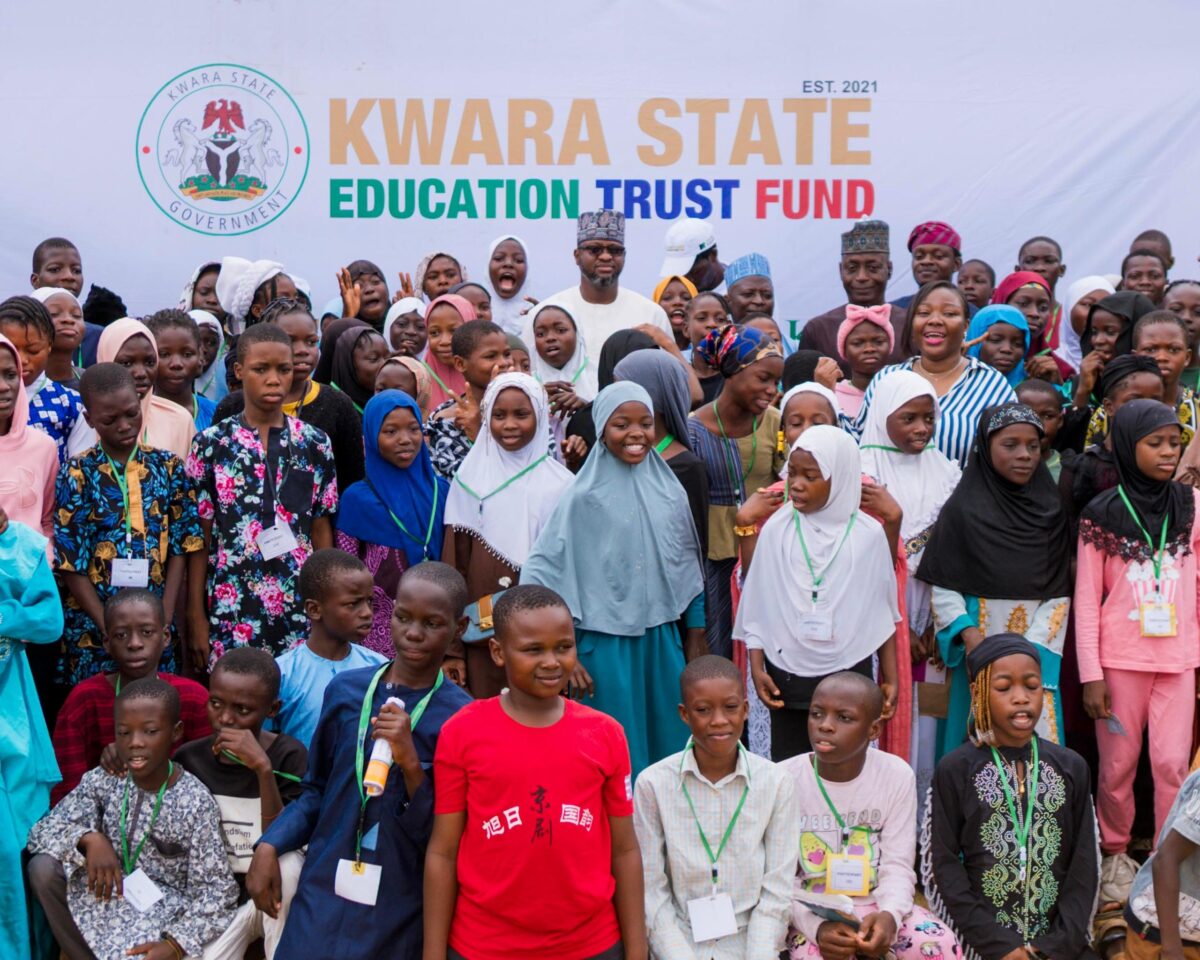
The Kwara State Education Trust Fund (KwaraETF) has concluded its 2026 Summer School, a structured holiday learning programme that brought together academic enrichment, leadership development, public speaking, digital literacy, entrepreneurship and practical skills for secondary school students across Kwara State.
The five-week initiative began with two weeks of volunteer preparation and training, followed by the student Summer School, which ran from 4 to 25 August 2026 at Government Day Secondary School (GDSS), Oke Aluko, Ilorin.
A major component of the Summer School was Project TutorED 2026, delivered through a strategic partnership between KwaraETF and She Builds Lives Foundation (SBLF), with support from the Evergreen Initiative and Saleeman Adedoyin Saleeman (SAS) Foundation. Project TutorED has been implemented for several years and was brought to Kwara as part of the Fund’s effort to create richer learning and development opportunities for young people during the long vacation.
The programme recorded 204 registrations, 150 enrolled participants and 120 successful completers, representing an 80 per cent completion rate. Female participants accounted for 75 per cent of the cohort, while male participants accounted for 25 per cent.
MORE THAN A HOLIDAY CLASSROOM
The Summer School was designed to give students an experience that went beyond conventional classroom learning.
Alongside academic sessions, students participated in Mathematics, English Language, financial literacy, civic education and other learning activities, while also developing skills in public speaking, leadership, digital literacy, entrepreneurship and vocational crafts.
For many students, the most memorable part of the experience was the opportunity to create something with their own hands.
Through practical sessions in bead making, soap making, arts and crafts, tie and dye and other vocational activities, students moved from learning concepts to producing tangible items.
The programme culminated in an exhibition where participants displayed the products they had created. Some were sold, while others were given to parents as a gesture of appreciation for the support they provided throughout the programme.
The experience also strengthened students’ confidence and communication skills through presentations, leadership exercises and an inter-cohort debate championship. The programme evaluation recorded improvements in practical production capability, public speaking confidence, safety awareness and entrepreneurship-related skills.
“EDUCATION MUST EXTEND BEYOND THE CLASSROOM”
Speaking on the outcome of the Summer School, Executive Secretary of KwaraETF, Oluwadamilola Amolegbe, said the programme reflected the Fund’s commitment to creating educational experiences that prepare young people for the realities beyond school.
“Education must extend beyond the classroom. When young people are given the opportunity to learn, create, speak, collaborate and explore new possibilities, we are not simply keeping them occupied during the holidays; we are helping them discover what they are capable of.”
She added that the value of the Summer School was not measured only by what students learnt, but also by the confidence they developed and the possibilities they began to see for themselves.
A SUMMER SCHOOL THAT PARENTS COULD SEE
The impact of the programme was also evident to parents.
One parent shared that she had initially been anxious about her daughter making the daily trip to and from the programme and had wondered whether the commitment would ultimately be worthwhile.
As the programme progressed, however, her concerns gave way to excitement as she saw her daughter learning new things and returning home with stories of what she had learnt and created. She commended the volunteers and facilitators for their dedication and the value they brought to the students.
It was a reflection of one of the central outcomes of the Summer School: giving students something meaningful to take home—not only in the form of new skills, but in confidence, curiosity and a renewed enthusiasm for learning.
STUDENTS TAKE THE DEBATE FLOOR
The Summer School also gave students a platform to express their ideas and defend their positions.
The inter-cohort debate championship challenged participants to research, reason, communicate and work as teams.
The winning team, Cohort B1, representing Bead Making, successfully argued in support of the motion:
“Artificial intelligence and digital tools will improve African education faster than traditional school reforms.”
The team scored 70 per cent.
The second-place team, Cohort A2, representing Soap Making, debated the motion:
“Vocational and technical skills are more important for community development than conventional classroom education.”
The team argued against the motion and scored 60 per cent.
The debate provided a fitting demonstration of the breadth of the Summer School experience: students were not only learning skills, but learning how to think, communicate and make a case for their ideas.
CELEBRATING EXCELLENCE
The closing ceremony on 25 August also provided an opportunity to recognise students who distinguished themselves throughout the programme.
Outstanding participants were recognised across categories including academic performance, skills acquisition, leadership, punctuality and active participation.
Students were also recognised in specific areas including English Language, Mathematics, Bead Making, Public Speaking and Tie and Dye, while Ojo Precious was recognised as the most punctual participant.
Through the support of the Blissful Hands and Hearts Foundation, ten outstanding participants received Back-to-School Packs containing school bags, notebooks, socks, pens and pencils, alongside additional books provided through SAS Foundation.
The recognition was designed not only to celebrate achievement, but to reinforce the values that the Summer School sought to develop: commitment, excellence, creativity, leadership and active participation.
STAKEHOLDERS JOIN STUDENTS TO CELEBRATE
The programme also attracted significant engagement from key education and government stakeholders, reflecting a shared commitment to investing in the development of young people across Kwara State.
Among those who engaged with the programme were the Commissioner for Education and Human Capital Development, Dr Lawal Olalekan Olohungbebe; Chairman, Association of Local Governments of Nigeria (ALGON), Kwara State Chapter, Hon. Abdullahi Danladi; Chairman, House Committee on Education and Human Capital Development, Kwara State House of Assembly, Hon. Mohammed Salihu Boriya; and Kwara SUBEB Monitoring & Evaluation Deputy Director, Mrs. Salamat Ayilara and other education and government stakeholders.
Their engagement gave students an opportunity to interact with senior leaders and reinforced the message that their education, aspirations and future remain a collective priority.
The closing ceremony attracted more than 180 attendees and featured the debate championship, student exhibition, recognition of outstanding participants, certificate presentations and engagement with parents and invited guests.
LEARNING THAT CONTINUES
For KwaraETF, the conclusion of the Summer School is not the end of the learning journey.
Selected participants will continue to receive opportunities for mentorship and practical exposure, including public speaking mentorship, continued facilitator mentorship in selected vocational areas, internship opportunities for selected tie-and-dye participants, and content creation opportunities.
The experience has also reinforced the strong demand for structured holiday learning opportunities among students and parents. The programme found that combining academic enrichment with practical skills training increased engagement and retention, while public speaking, leadership and entrepreneurship added significant value to the educational experience.
As KwaraETF continues to expand educational opportunities for young people, the lessons from the 2026 Summer School will inform future youth-focused interventions, including efforts to broaden access across the State and strengthen post-programme mentorship and tracking.
The KwaraETF Summer School 2026 ultimately offered students something larger than a productive holiday. It gave them a space to learn, speak, create, compete, lead and discover new possibilities.
And as the students returned to their schools, they did so carrying more than certificates: they carried new skills, new confidence and the knowledge that their ideas, creativity and potential matter.